20 Definitive Reasons On International Health and Safety Consultants Assessments
Wiki Article
Your World, Your Workplace- A Guide In International Health And Safety Services
When a company operates in several countries, the workplace is no longer a single building or location, it is a network of offices spread across the globe that are each a distinct cultural, legal operating and cultural context. The old method of imposing one safety program that is based on the headquarters every overseas outpost has flopped frequently, resulting into resentment and discontent from local teams and subjecting businesses owned by the parent company to liability which they were unaware of. International health and safety systems have evolved to accommodate the needs of today's workforce, providing a hybrid model that recognizes local sovereignty while maintaining global exposure. This guide will outline the 10 fundamentals to know about how modern global health and safety services actually function, extending beyond theory to practical mechanics of protecting a global workforce.
1. The Difference Between Global Standards and Local Legislation
One of the first things that safety professionals from around the world learn is that global standard and regional laws are not the same. A company may have excellent internal standards that are based on ISO frameworks but if these standards are in conflict with local laws on the ground in Indonesia or Brazil in the case of Brazil or Indonesia, the local legislation wins every time. International health and safety services provide the means to deal with this tension to help companies create plans that satisfy or exceed all expectations, while staying legally safe in every place they operate. It is essential to have consultants who can comprehend international standards as well the specific statutory requirements of different countries.
2. The Three-Legged Stool of International Safety Services
Effective international health and safety services are built on three interdependent components: expert consulting, robust software platforms and locally delivered services. The consulting leg provides directions and technical expertise as well as assistance to organizations develop frameworks that function across borders. The software segment provides the infrastructure for data collection reports, visibility, and transparency. The local services leg--including training, audits, and assessments delivered by in-country professionals--ensures that global strategies translate into local action. Remove any one leg, and the system becomes unstable that results in theoretical plans without execution or local actions that are unnoticed by headquarters.
3. Auditing across cultures requires local Knowledge
Audits of international health and safety present challenges that domestic audits can't handle. Auditors must negotiate differences in languages, cultures towards safety, as well as different practices for documenting. An auditor from Europe who is working in a factory in Vietnam cannot just apply European procedures and expect to get accurate results. The most effective international audit services utilize auditors who are native to the region or having extensive in-country experience who understand not just the technical standards but also how work actually is carried out in a cultural context. Auditors can serve as cultural translators as much as they are technical assessors.
4. Risk Assessment Is Never One-Size-Fits-All
A risk assessment technique which is suitable for an office in London might not be suitable for construction sites in Dubai or an underground mine in Chile. International safety standards recognize risks assessment principles might be universal but their application needs to be extremely localized. Effective companies have libraries of individual risk profiles and assessment templates that enable them to make assessments based on actual local circumstances rather than global assumptions. This localization extends to taking into consideration regional hazards -- cyclones affecting the Philippines for instance, earthquakes in Japan or the political turmoil in particular regions that global frameworks might otherwise overlook.
5. Software Must Function Where the Internet Does Not
Many of the software platforms that are used worldwide fail due to their dependence on constant high-bandwidth connectivity to the internet. The reality is that many global companies have intermittent internet connectivity, and even offshore platforms that are the best, remote mining operations, and factories in areas with poor connectivity often lack internet connectivity. Proficient international health & safety software solutions have a keen understanding of this providing robust offline functionality that lets users record incidents, carry out assessments and access reports without connectivity that automatically synchronizes once connections are restored. This is a practical distinction between platforms made for fieldwork on a global scale from those made for headquarters usage only.
6. The Consultant as Translator Between Worlds
Health and safety experts from around the world play a role that goes much beyond providing technical advice. They are translators - not just of languages, but also of expectations as well as practices and legal requirements. An advisor for a Japanese parent company that has operations in Mexico must be aware of not just Mexican safety law but also Japanese corporate reporting obligations, and should be able explain each to the other in terms they can understand. This is what the finest service international consultants can offer, delaying the inconsistencies that impede the global safety efforts.
7. Training That Respects Local Learning Cultures
Safety training designed in one country is rarely effective with no significant change. Instructional methods that work in Germany can fail completely with respect to Thailand where classroom dynamics and attitudes to authority are different significantly. International health and safety services which offer training services have come to adapt not just the language used in their resources, but their entire method of instruction to reflect local learning cultures. This could mean more hands on demonstrations in certain regions, and more formal classroom instruction elsewhere but also paying attention to whom the trainers are and the way they are perceived locally.
8. The growing importance of Psychosocial Risk Management
Health and safety in international settings are expanding beyond physical safety to address mental health risks such as stress, harassment emotional health, and burnout. All of these appear differently in different cultures. What is considered discrimination in one nation may be normal workplace behaviour in another, yet multinational companies must adhere to uniform ethical standards throughout the world. Modern international safety companies aid organizations in navigating this tricky terrain, developing policies that take into account local cultural norms while preserving global standards, and educating local managers on how to identify and manage psychosocial risks in a timely manner.
9. Supply Chain Pressure is Affecting Demand for Service
Multinational corporations are increasingly held accountable for the health and safety conditions across its supply chain and not only within their individual operations. The pressure to improve their reputation and compliance is fuelling worldwide demand for health and safety companies that can evaluate and improve safety conditions at supplier facilities all over the world. These services typically include auditing--testing the supplier's compliance to buyer standards - with capacity-building support, helping suppliers to develop the capabilities to manage their safety instead of simply policing failures.
10. The Shift from Periodic to Continuous Engagement
In the past, international health security services were provided on a base of project work: an organization hired consultants for an audit, produce an audit report, then depart. The current model is significantly different and characterized by the continuous engagement of an integrated platform of technology. Clients can monitor their safety and security status globally. consultants provide continuous support instead of singular recommendations, and local companies provide services on an as-needed basis and coordinated with the central platform. The shift from periodic engagement to ongoing engagement highlights the fact that safety is not the type of project with a set end date, but a continuous operational function requiring constant attention. See the top rated health and safety services for website advice including health and risk assessment, safety website, health safety and environment, occupational health, workplace safety courses, safety management system, hazards at work, health and safety, work safety, health and safety specialist and top rated health and safety software for website advice including occupational health and safety, office safety, health at work, occupational health & safety, safety moment, health and safety training, occupational health and safety act, safety moment ideas, occupational health & safety, safety website and more.
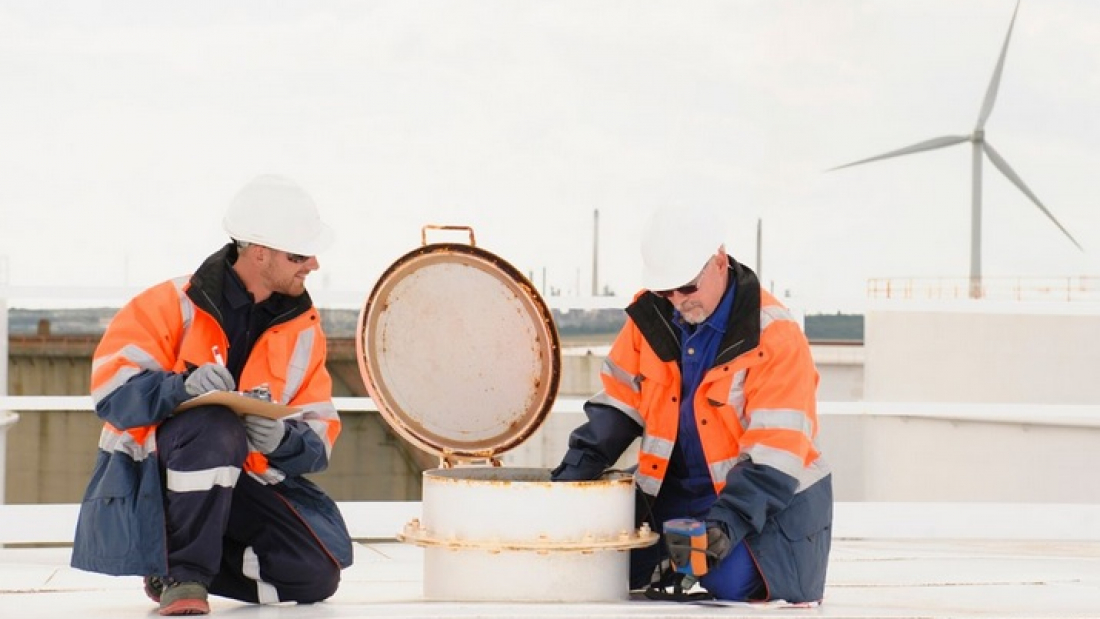
Achieving The Future Of Workplace Safety: Integrating On-The-Ground Expertise With Global Tech Solutions
The safety profession is at an inflection point. Since the beginning of time, progress in engineering has meant better controls for engineers, more extensive training, and more strict enforcement. These processes are still important but they've gotten to declining returns in a variety of industries. The next major leap forward will take place not from one technology, but rather the combination of two capabilities which have been developed independently with the deep understanding of safety experts in the field who know specific workplaces and the analytical power of technological platforms across the globe that can process huge amounts and volumes of data and detect patterns that are not visible to any individual. This isn't about replacing human beings with machines. It's about increasing the human judgement with machine-generated intelligence, so that the safety worker on the ground improves their effectiveness, is more accurate, and more influential as never before. In the future, workplace safety goes to those who have the ability to combine these worlds effortlessly.
1. the limits of Purely Technological Approaches
The tech industry has repeatedly made promises that software alone will improve workplace safety. Sensors could spot hazards, algorithms would predict incidents, and artificial intelligence would instruct workers on what to do. This has always failed because safety is a fundamentally human issue. It entails human behavior, the human mind, human relationships with human beings, and their consequences. Technology may inform and facilitate yet it cannot substitute the nuanced understanding that an experienced safety professional brings to an environment that is complex. The future is about integration and not to replacement.
2. There are limits to Purely Human Approaches
However, human-centered methods have reached their limits. Even the most experienced safety expert is able to only see too much, keep track of so much, and connect to many dots. Human judgement is subject to fatigue, biases as well as the limitations of individual perspective. There is no one who can keep in their mind the patterns emerging across multiple sites and the most prominent indicators that have been a precursor to other incidents, as well as the regulatory changes that affect sectors they do not follow. Technology can extend human capability beyond these natural limits, providing memory, pattern recognition and global perspective that complement rather than replace professional judgement.
3. Predictive Analytics Tells You Where to Look
The most effective application of merged capabilities is predictive analytics which informs experts on the ground where they should focus their attention. The software analyses historic incident data, near miss reports, audit findings, and operational metrics to identify places, activities, and circumstances that could be associated with high risk. The safety professionals investigate these risks, using a their own judgment to see what the numbers mean in context. Are the risks they predict real? What underlying factors are driving these risks? What interventions make sense here with regard to local restrictions and culture? The technology is pointing; Humans make the decisions.
4. Sensors and wearables generate continuous Data Streams
The emergence of wearable devices and sensors in the environmental creates continuous streaming of safety-related information that would be impossible for a human to gather. Heart rate variation that indicates worker fatigue. Analyses of air quality identifying dangerous exposures. Tracking location to detect access to potentially hazardous areas. Motion sensors detecting slips or falls. The global platforms combine this information across different regions and sites, identifying patterns that warrant special attention from humans. Experts on the ground investigate, validating sensor readings, getting a sense of context, and coming up with the most appropriate response. Sensors collect data and the human beings provide the significance.
5. Global Platforms Allow Local Benchmarking
Safety professionals have often wondered what their performance is compared to others, but reliable benchmarks were seldom available. Global technology platforms change this by collating anonymised data across regions and industries. As a manager of safety for Malaysia is now able to view how their incident frequency or audit findings and top indicators compare to similar facilities in their area as well as globally. This information helps in establishing priorities as well as provides proof to support the need for resources. When local experts can prove that they are performing better than competitors in the region, they have influence for investing. If they can lead their teams, they gain credibility and recognition.
6. Digital Twins Allow Remote Expert Consultation
Digital twin technology creates virtual copies of actual workplaces that change in real time -- allows for a fresh method of expert consultation. When an on-site safety manager encounters a problem that is complex they are able to communicate remotely with experts in the field who are able to explore the digital model, study relevant data, and offer information without leaving the premises. This feature allows anyone to gain access information, allowing facilities that are located operating in remote locations or economies to gain access to world-class expertise that might otherwise not be accessible or cost prohibitive.
7. Machine Learning Identifies Leading Indicators
Traditional safety metrics are complete slack, and they only reveal what's occurred. Machine learning applied to data sets is increasingly capable of identifying indicators that are able to predict future incidents. The patterns of near-miss reporting change. Variations in the types of observations documented during safety walk. It is possible to observe a delay between hazard identification and correction. These leading indicators, identified by algorithms, serve as areas of focus for experts on-the-ground that can analyze what's creating the shifts and intervene before any incidents happen.
8. Natural Translation Processing Extracts Information from Unstructured Data
The majority of relevant safety documents are in unstructured forms, like investigation reports, safety meetings minutes, interview notes, emails and discussions. Natural language processing functions within integrated platforms can analyse the contents of these documents in a way that is large to identify thematic patterns, sentiment shifts, and emerging concerns that a human reader cannot synthesize. If the software finds that employees from multiple locations are complaining about the same thing an individual procedure it informs regional and world experts who will investigate whether the procedure itself needs overhaul, not just local enforcement.
9. Training becomes individualised and adaptable
The fusion of on-the-ground experience along with global technologies allows for training that is tailored to requirements of the worker. The platform tracks each worker's specific role, his or her experience, information, and the time since training was completed. When patterns indicate specific knowledge deficits--people in certain roles who have been repeatedly participating in specific kinds of incidents--the system suggests specific instruction. Local experts review these recommendations making adjustments to reflect the context and oversee delivery. Training is personalised and continuous rather than sporadic and generic, addressing actual needs as opposed to preconceived expectations.
10. The Safety Professional's Role Elevates
The most important benefit of this merger is the reshaping of the role of the safety specialist. Eliminated from data collection and report generation tasks that software takes care of better specialists on the ground concentrate on more lucrative tasks such as building relationships with people, understanding operational realities developing effective interventions and changing the culture of the organization. Their opinion is more valuable since it is based off evidence they couldn't have collected themselves. Their recommendations have more credibility because they are based on data that is beyond personal experiences. The new safety professional in the workplace isn't a threat to technology, but empowered by it. They are more informed, more influential and more effective than ever before. See the best international health and safety for website examples including occupational safety, risk assessment, safety companies, smart safety, workplace health, occupational health and safety careers, workplace health, health in the workplace, safety hazard, safety meeting topics and more.
